
“Don’t be a tool.”

Updated: Apr 10
“Don’t be a tool.”
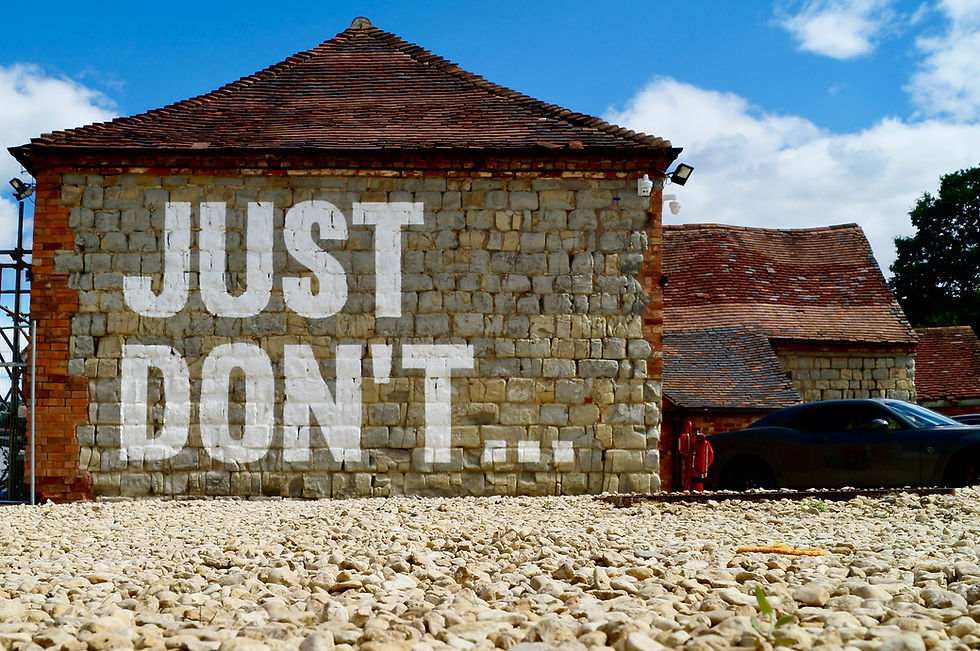
I heard that a lot growing up. Maybe you did too.
It usually meant something like, don’t be annoying or don’t ruin the fun. Sometimes it was said to someone who seemed entitled — someone acting like they thought were better than everyone else.
I don’t hear the phrase much anymore. But I think about it often.
Because now, when I hear the word tool, I think of Audre Lorde’s words: “The master’s tools will never dismantle the master’s house.”
I want to sit with that for a moment.
When Lorde talks about the master’s house, she’s talking about the systems we live inside every day. Systems built to benefit some people while harming others. In the U.S., this includes systems shaped by whiteness, racism, patriarchy, capitalism, and the belief that some people matter more than others.
That’s the house.
And the master’s tools? Those are the ways the house stays standing.
Fear. Division. Silence. Looking away. Being taught not to ask certain questions. Being taught that “this is just how it is.”
Lorde’s point is simple and unsettling — you can’t tear down an unfair system with the same beliefs or habits that built it.
That idea hits me every time. Because it makes me wonder — where have I been a tool?
Where was I shaped, without realizing it, to think, act, and move in ways that kept things exactly as they were?
I didn’t set out to cause harm. I learned things.
I learned who was “normal.” I learned whose voices mattered more. I learned what questions and topics to avoid.
And a lot of those lessons came from whiteness.
Race isn’t just something I think about in theory. I’m married to a black man. I’m raising three brown kids in the United States. For them, race is about safety. About how they’re seen, about how quickly the world decides whether they belong. About how quickly they’re seen as dangerous or suspicious.
For me — as a white partner and parent — this means I can’t stay stuck in the same ways I’ve always been with race. It means I have to look at what I was taught about race, about myself, and about others. Not with shame — but with honesty.
When I look back, I can see it more clearly now — for a long time, I was a tool of whiteness.
I repeated stories I didn’t questioned. I accepted separation and being surrounded by white people as normal. I protected comfort instead of truth. I held onto a white identity that promised safety, even when it was built on lies.
Not because I was cruel. But because this is how whiteness works.
It trained me early. It shaped how I see the world. It told me who to trust — and who to ignore. It rewarded me for not noticing.
And unless I stop and really look at those lessons, I keep passing them on — into my relationships, my family, my workplace, my faith, and my community.
Right now, we also see our national leadership using language and policy in ways that mirror those tools. When the president uses dehumanizing language — referring to people crossing the border as “animals,” for example — it echoes long histories of stripping people of their humanity. Calling people “animals” isn’t just rhetoric; it makes it easier to see them as less than human. That kind of language has meaning and impact — especially when it comes from a white leader.
We also see formal government bodies like the Department of Homeland Security embracing terms like “remigration” — a word tied historically to far-right and white supremacists movements advocating for mass expulsion of migrants along racial lines — that has appeared in official posts and planning discussions.
And when it comes to voter fraud, I keep hearing the same claim — that immigrants are voting illegally. But the truth is, this almost never happens. Over and over, studies have shown that non-citizen voting is extremely rare and not a real threat to our elections.
This story isn’t new. And it serves a purpose. It distracts us.
It pulls our attention away from a harder truth — that whiteness has always been a threat to fair and free elections in the U.S. From the very beginning, rules were put in place to protect white political power by limiting who could vote. Poll taxes. Literacy tests. Intimidation. Later, racial gerrymandering and restrictive voter ID laws.
Today’s false claims about immigrant voting keep that pattern going. They shift the focus away from how mostly white lawmakers continue to redraw voting maps and pass rules that make it harder for black and brown communities to participate fully in democracy. Fear and misinformation are used to protect power, instead of expanding it.
When this language and these patterns go unchecked — whether in everyday conversations or through silence in civic life — we also risk becoming tools, because we allow white supremacy to go on without resistance.
So now, I’m trying to choose differently.
I’m asking myself, What kind of tool do I want to be?
Do I want to keep helping hold up systems that harm — just by staying quiet, staying comfortable, staying the same?
Or do I want to help build something else?
I want to help build equity. I want to be a tool for truth, connection, shared humanity, and liberation. I want to loosen the grip of stories that tell us separation and dehumanization are normal or necessary.
Because staying loyal to whiteness keeps the house standing. And I don’t want to live in that house anymore.
I’m done being a tool for whiteness.
Being done with that is ongoing and messy. I’m often unsure and still unlearning. But I’m building new community, showing up differently in relationships, and it has been worth it.
And maybe — if you’re feeling a similar pull — this is an invitation for you too.
What did you learn about being white?
What beliefs still feel “normal” or “obvious” to you?
Who do you listen to without question?
What do you resist, defend, or explain away?
Because we are shaping the world around us. With our choices. With our silence. With what we’re willing to question.
So I’ll ask it again — What are you a tool for right now?


Comments