
Race Is Not a People of Color Thing

It isn’t. It never was. But that’s what I was taught — and for a long time, I believed it.
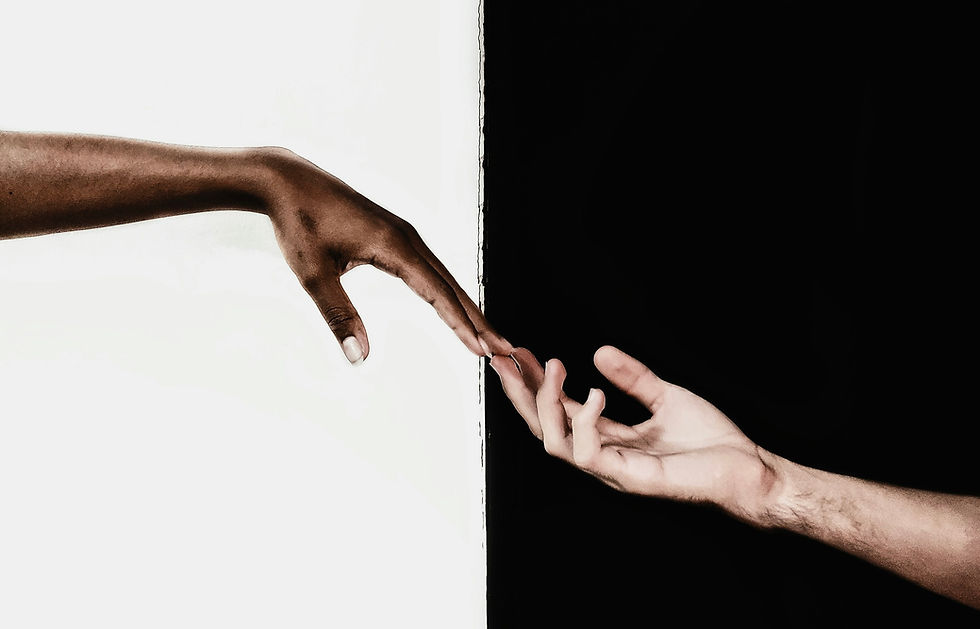
For most of my life, as a white person in the U.S., I carried an assumption I didn’t even realize I had: that race belonged to other people. Black people. Brown people. Indigenous people. Race was their story to navigate.
And I — a white person who wasn’t openly or actively racist — somehow imagined myself standing outside of it all. Neutral. Exempt.
It took years of unlearning to face what I now know: I was never outside of race. Whiteness connected me to it the entire time. Looking back, it feels almost absurd that I believed otherwise.
But how did I get there?
Like many white people I know in the U.S., I was never taught that whiteness itself had a history. I never learned that the racial category “white” didn’t always exist the way many of us understand it today. That whiteness was created by white people, for a purpose.
That realization changed a lot for me.
Historians have documented how colonial laws in the 1600s increasingly separated Europeans, Africans, and indentured laborers into rigid racial categories that hadn’t previously existed. Historian Barbara J. Fields argues that race is not an ancient biological reality, but something deliberately produced through systems of power. European colonial elites invented the category of “white” to divide poor Europeans from enslaved Africans — to consolidate political and economic power. Whiteness was created as a tool of control.
According to historian David Roediger, by the 18th century, “white” had become a firmly established racial category in the colonies — not simply a neutral description of appearance or ancestry, but a construction designed to create social, psychological, and political distance between poor Europeans and enslaved Africans. It aligned poor Europeans with the interests of the “white” ruling class rather than with other exploited people. Whiteness became a way of organizing belonging, hierarchy, and power.
Social psychologist Keon West points to decades of research showing that racism remains “real and ubiquitous” in everyday life. The racial hierarchy whiteness helped build did not vanish with the end of slavery or segregation. It adapted. It became embedded in institutions, policies, assumptions, and everyday interactions.
The language may have changed. Many of the old forms may have evolved. But the underlying patterns of racial inequity and unequal power remain deeply woven into U.S. society. This thing that whiteness started didn’t simply fade away.
Race wasn’t discovered. It was designed. And whiteness was engineered to sit at the top — and to stay there.
That’s not a political opinion. That’s verifiable history. My history, as a white person in the U.S.
So when I told myself race belonged to communities of color — that it wasn’t really my issue — I was opting out of my own story. Choosing to work with incomplete information about what has shaped me, and what continues to shape this country. I wasn’t able to fully live out my values because I couldn’t acknowledge and be accountable for this piece of the puzzle.
I’ve come to understand that whiteness has a cause. It has always had a cause. And that cause is the accumulation and protection of power — at the direct expense of people of color.
For me, starting from that understanding — and actively wanting to resist what whiteness is doing — changes how I see everything. How I understand systems, relationships, and everyday moments. How I understand myself, the events unfolding around me, and what I can do to help build a world that’s more equitable, more caring. One that values and protects my Black partner’s and brown children’s lives and rights. One where the dignity and rights of all people are protected.
It’s also changed the kinds of questions I ask. Whenever something happens in my everyday life or in the larger U.S. that has to do with race, I often find myself asking: What does this have to do with whiteness? What is whiteness up to here? What is my role — as a white person — in undoing it?
As an ongoing practice. As serious inquiry. Because once I started asking those questions, I couldn’t stop seeing the answers. Whiteness is almost always at work.
Take voting rights in the U.S.
On April 29, 2026, the Supreme Court issued its decision in Louisiana v. Callais. In a 6–3 vote, the Court struck down Louisiana’s congressional map. It was a map that had created two majority-Black districts, drawn under court order to comply with the Voting Rights Act (VRA). The ruling severely weakened Section 2 of the VRA, a protection long hailed as the pinnacle of the Civil Rights Movement.
And what happened the very next day? Louisiana’s white Governor Jeff Landry issued an executive order suspending the state’s ongoing congressional primaries. He did this to make room for new maps. Maps that, by most analysis, are expected to favor Republicans — but that could eliminate one or both of the state’s majority-Black districts.
So ask the question with me: What does this have to do with whiteness? What is whiteness doing here?
This isn’t happening in a vacuum. We needed the VRA in the first place because of what whiteness had already done. We need the VRA today because of what whiteness is still trying to do.
After the 15th Amendment was ratified in 1870 — guaranteeing the right to vote regardless of race — southern states got to work. Poll taxes. Literacy tests. Grandfather clauses. Felony disenfranchisement. Intimidation. All designed to keep Black citizens from the polls. White legislators used loopholes in the 15th Amendment to implement a range of measures to disenfranchise Black voters without explicitly mentioning race. The laws were written to look neutral. But their impact was anything but.
Then in 2013, in Shelby County v. Holder, the Supreme Court struck down the formula that determined which states had to get federal approval before changing their voting laws. Essentially, dismantling federal oversight keeping states accountable. The same day, Texas officials announced that they would implement the nation’s most restrictive voter ID law, which had previously been blocked.
Since then, many states passed laws limiting things like early voting, online voter registration, and access to polling places. While these laws are often written to sound race-neutral, research from the Brennan Center for Justice found that the gap between white voter turnout and nonwhite voter turnout grew larger in many of the places that had previously been monitored under the VRA. Whiteness has long worked to protect white political power, often through laws that avoid explicitly mentioning race while still making it harder for Black communities to fully participate politically.
The white Republican leaders rushing to redraw voting maps may not be saying the word “race.” White folks rarely do when we’re about the work of maintaining whiteness. They’re talking about “partisan goals” and “political objectives.” But the effect is the same as it has always been: diluting the political power of Black voters. Permitting states to use partisan gerrymandering as a comprehensive excuse to deny Black voters a voice in their government.
This is whiteness at work. This is white people working to ensure the cause of whiteness. Not in spite of the law — through the law.
The methods evolve. Literacy tests and grandfather clauses may be gone. But the architecture remains: keep power where it is. Keep communities of color from electing the representatives of their choice. Voter ID laws, polling place closures, gerrymandered maps that dilute the votes of communities of color — these are the new architecture.
Political leaders who move swiftly to redraw maps after a ruling like this — who feel no urgency about Black voter disenfranchisement, who see it as a political opportunity rather than a moral catastrophe — are standing with whiteness. They are serving its cause. They may not think of it that way. But the cause of whiteness has always been the consolidation of power and the marginalization of people of color — and you don’t have to use the word “race” to advance it.
So What Do We Do With This?
I’m not writing this to shame anyone. What I’m after is something more useful: accountability, responsibility, agency. The things that make lasting change more likely. Ways to counter all the years I spent learning to keep myself — and whiteness — exempt. Ways to do that in community with others.
The question — what does this have to do with whiteness? — is one way I’ve found to see more clearly. When race is in the room, whiteness is in the room. When Black voters lose political power, whiteness is in the room. When a conversation stops the moment someone names a truth about racial inequity, whiteness is in the room.
As a white person in the U.S., my silence is not neutrality. My discomfort is not the same as danger. And the lies I was told about who race belongs to — those lies have real costs. For real people. Right now.
Friends, we can tell the truth about whiteness. We can get curious instead of going quiet. We can hold white leaders, friends, family, community, and ourselves accountable. We can stop excusing ourselves from a conversation that has always included us — and a story that is ours to reckon with.
Want to go deeper? Here are some resources I find helpful:
5 Calls — Take action: contact your representatives and ask them to protect voting rights. 5 Calls makes it easy to have your voice heard.
Hello Whiteness — my organization’s work on naming and dismantling whiteness.
NAACP Legal Defense Fund: Louisiana v. Callais — what the ruling means for Black voters
Brennan Center for Justice — analysis of the decision and its impact on Section 2 of the VRA
National Archives: Black Americans and the Vote — the historical record on voting suppression
Theodore W. Allen, The Invention of the White Race — foundational scholarship on how whiteness was constructed
Keon West, The Science of Racism — modern scientific evidence showing the enduring existence and impacts of racism


Comments